


KIX Kitties and K9s: Meet Lucille!
Meet Lucille, the epitome of charm. This laid-back lady is your ideal companion, always ready to share life’s moments by your side. Lucille’s journey began as a devoted mother, nurturing seven chubby pups while in the care of a local shelter. Since joining the Second Chance family, Lucille has captured the ...
Dec 18, 2025

Super 70s Weekend, brought to you by Weaver Broers Volvo and Volvo Cars of Cary!
Celebrating disco, bellbottoms, platform shoes, Classic Rock and more, including the biggest hits of the 70's from superstars like The Eagles, Billy Joel, Fleetwood Mac, Bee Gees, Queen and more. Sponsored by Weaver Brothers Volvo and Volvo Cars of Cary. Selling and servicing Volvos in the Triangle since 1958. Volvo......
Aug 19, 2026

American Top 40, Brought to You by Real Wood Floors
KIX 102FM is your home for the Original American Top 40 Countdown Shows with the legendary Casey Kasem. Saturdays at 6 a.m. and 8 p.m. you can hear the 80s version and Sunday mornings at 9 a.m. and 9 p.m. it's a trip back to the 70s. Brought to you this week by Real Wood Floors - Trusted by homeowners, builders, and de...
Aug 19, 2026

Enter to Win the Lawn Doctor Kix Fix Fall Lawn Rescue!
Suit up. Sound the alarm. Call in the Lawn Doctor! Enter to Win the Lawn Doctor Kix Fix Fall Lawn Rescue! Is your lawn looking a little rough around the edges? Fear not-KIX 102 and Lawn Doctor are coming to the rescue! Enter the KIX FIX Fall Lawn Rescue for your chance to win a professional lawn makeover valued at up t...
Aug 17, 2026

KIX Kitties and K9s: Meet Lucky!
Meet Lucky! You would consider yourself lucky to be the one to adopt sweet puppy, Lucky! This cute boy is 30 lbs at 4 months old and loves to play. He's both potty-and crate-trained. He sleeps very well in his crate at night. He loves to explore and chew and he knows (for the most part) when something is acceptable to ...
Aug 13, 2026

KIX Kitties and K9s: Meet Tsuki!
Meet Tsuki! Tsuki is a one and a half beagle mix with a big personality and an even bigger heart. Weighing around 50 lbs, she's the perfect mix of playful energy and cozy cuddle bug. This sweet girl absolutely loves other dogs and would thrive in a home with a playful canine companion or an active family who enjoys wal...
Jul 30, 2026

KIX Kitties and K9s: Meet Seagull!
Meet Seagull! Don't worry, this Seagull won't steal your snacks... unless you offer them. And honestly, with a face this cute, you just might. Seagull is a charming, curious cat with a personality that's equal parts playful and easygoing. He's always keeping an eye on what's going on around him (like any good coastal o...
Jul 23, 2026

KIX Kitties and K9s: Meet Magic Mama!
Meet Magic Mama! The Vibe: A beautiful, sleek black-and-white girl who just needs a little initial patience to unlock a lifetime of devotion. Personality: Magic Mama is a timid sweetheart at first, but she warms up quickly to become a total bundle of love. She hits the perfect middle ground for affection-she isn't an i...
Jul 16, 2026

KIX Kitties and K9s: Meet Whiskey!
Meet Whiskey! Like her namesake, Whiskey has a little bit of everything that makes life interesting. She's friendly, fun, and easy to enjoy, but she's also perfectly comfortable doing her own thing when the mood strikes.Whiskey enjoys spending time with people and is always happy to join in when there's attention or pl...
Jul 09, 2026

KIX Kitties and K9s: Meet Levi!
Meet Levi! Levi is a gorgeous black house panther with a calm, affectionate personality. He enjoys attention, happily accepts belly rubs, and is always interested in what's going on around him. He has a relaxed, easygoing nature that makes him a joy to have nearby, whether he's lounging in a sunny spot or quietly keepi...
Jun 25, 2026

Dad's Day Rockin' Weekend!
All the best hits for Dad to "Rock Out" on his weekend, from 38 Special, Bachman Turner Overdrive, Bob Seger, Rolling Stones and more.
Jun 17, 2026

Granny's Bonnet adds native charm to North Carolina landscapes
RALEIGH, N.C. (WPTF) - I'm sure at some point our WPTF Weekend Gardener crew has discussed the virtues of growing Eastern columbine (*Aquilegia canadensis*) in our North Carolina landscapes. It's a fancy little flower on the list of native, hardy perennials we enjoy in North Carolina. Columbine blooms from spring into ...
May 07, 2026

The beauty of the fringe tree in North Carolina landscapes
RALEIGH, N.C. (WPTF) - I can vividly recall the first time I ever laid eyes on a "Fringe Tree" (Chionanthus virginicus), also known as "Grandfather's Beard." I was driving to cover a NASCAR race at Charlotte Motor Speedway in May in the 1980s. (They bloom in April now.) The specimen was in full, glo...
Apr 20, 2026

Eastern hemlock: North Carolina's redwood of the East
RALEIGH, N.C. (WPTF) - The hemlock found in North Carolina is a towering, majestic tree that can live for hundreds of years. The Eastern hemlock (Tsuga canadensis) and the Carolina hemlock (Tsuga caroliniana) are the two species that have grown for centuries in the Tar Heel State. They are part of the pine family. Howe...
Apr 15, 2026

Trout lily offers early sign of spring in North Carolina
The trout lily, a native North Carolina wildflower known for its brief late-winter bloom, offers a subtle but striking sign of spring in woodland landscapes. During a recent visit to the North Carolina Botanical Garden in Chapel Hill, a single blooming specimen highlighted the plant's delicate yellow and maroon petals ...
Mar 31, 2026
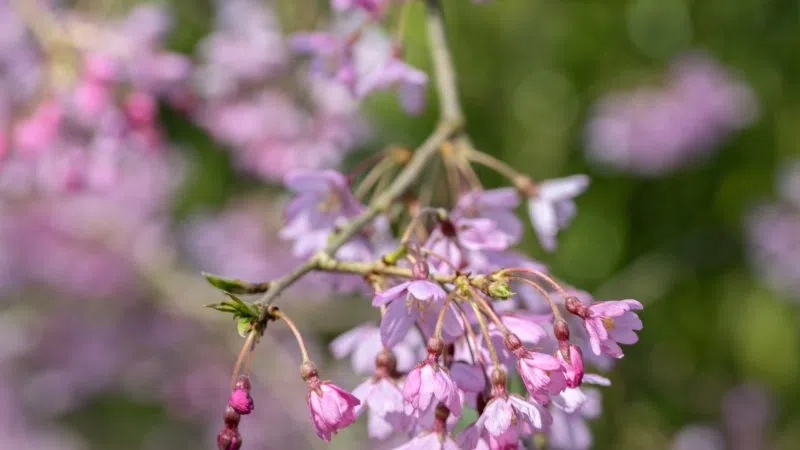
This unusual cherry tree thrives in North Carolina yards
By MIKE RALEY WPTF Weekend Gardener I have always been fascinated by unusual plants, trees, shrubs and flowers that I rarely see, especially those growing in North Carolina. Autumn-blooming cherry, Higan Cherry or Autumnalis Rosea (Prunus x subhurtella), is a rarity around these parts as far as I can determine. It is a...
Feb 01, 2026
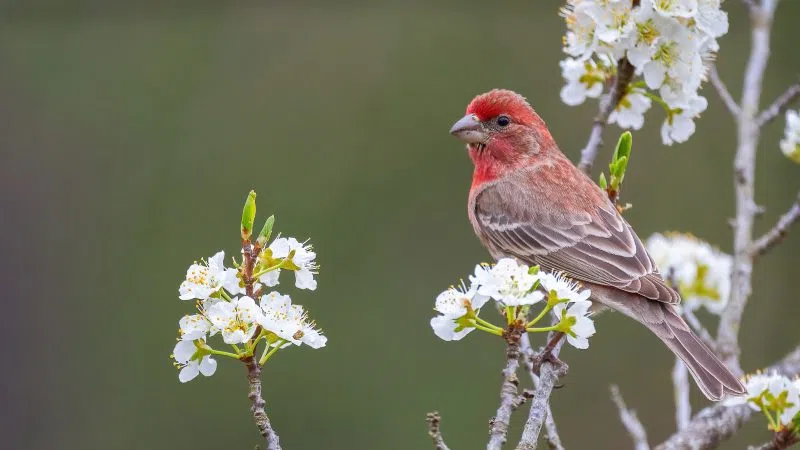
How native plants can turn your yard into a bird habitat
By MIKE RALEY WPTF Weekend Gardener I have spent many hours looking out our window into the backyard. It gives Melissa and me great pleasure. The same can be said for the joy of watching the many birds that visit and reserve their bit of habitat in the Raley landscape. I think my real interest in birding began with my ...
Jan 22, 2026
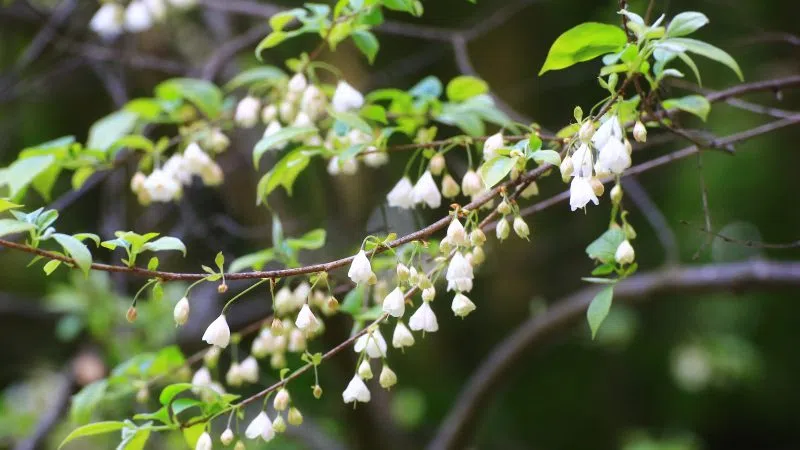
Bell-shaped blooms and quiet charm: discovering the Carolina Silverbell
By MIKE RALEY WPTF Weekend Gardener Alas, another plant I have never owned and rarely seen in the landscapes in the Triangle. Of course, I normally don't trespass to look for plants so there may be a lot more out there than I realize. One of the reasons may be that the Carolina Silverbell (Helesia carolina), a native f...
Jan 18, 2026

Why this winter flower challenges even seasoned gardeners
By MIKE RALEY WPTF Weekend Gardener Our friend Phil Campbell and her brother, who owns a separate nursery near Mt Airy, grow extraordinary plants of all kinds. Every year Phil brings down poinsettias and other Christmas wonders from brother Jim's place. Beauties like the Holiday Cactus and Cyclamen. It's the latter I w...
Dec 28, 2025
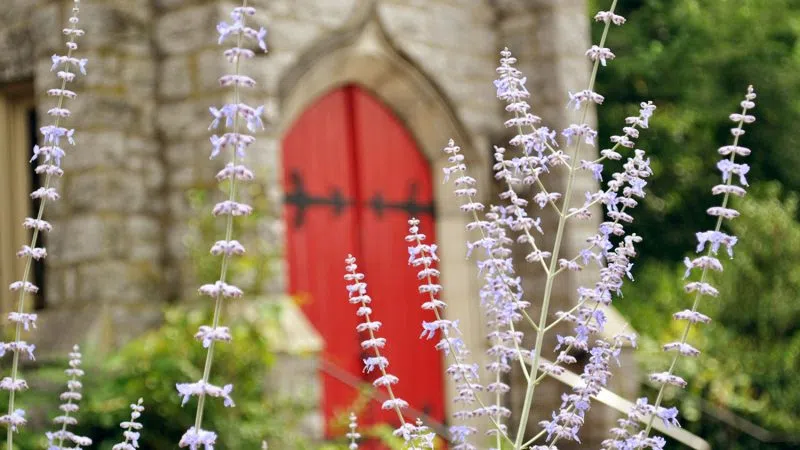
Tending God's earth: a journey of faith through gardening
I have always believed that God is in everything. There can be nothing on Earth to which this idea applies more than a garden. Don't forget - one of God's first creations was the Garden of Eden. George Bernard Shaw once wrote, "The best place to find God is in a garden." For me, gardening has become a spiritu...
Nov 30, 2025