
By MIKE RALEY WPTF Weekend Gardener
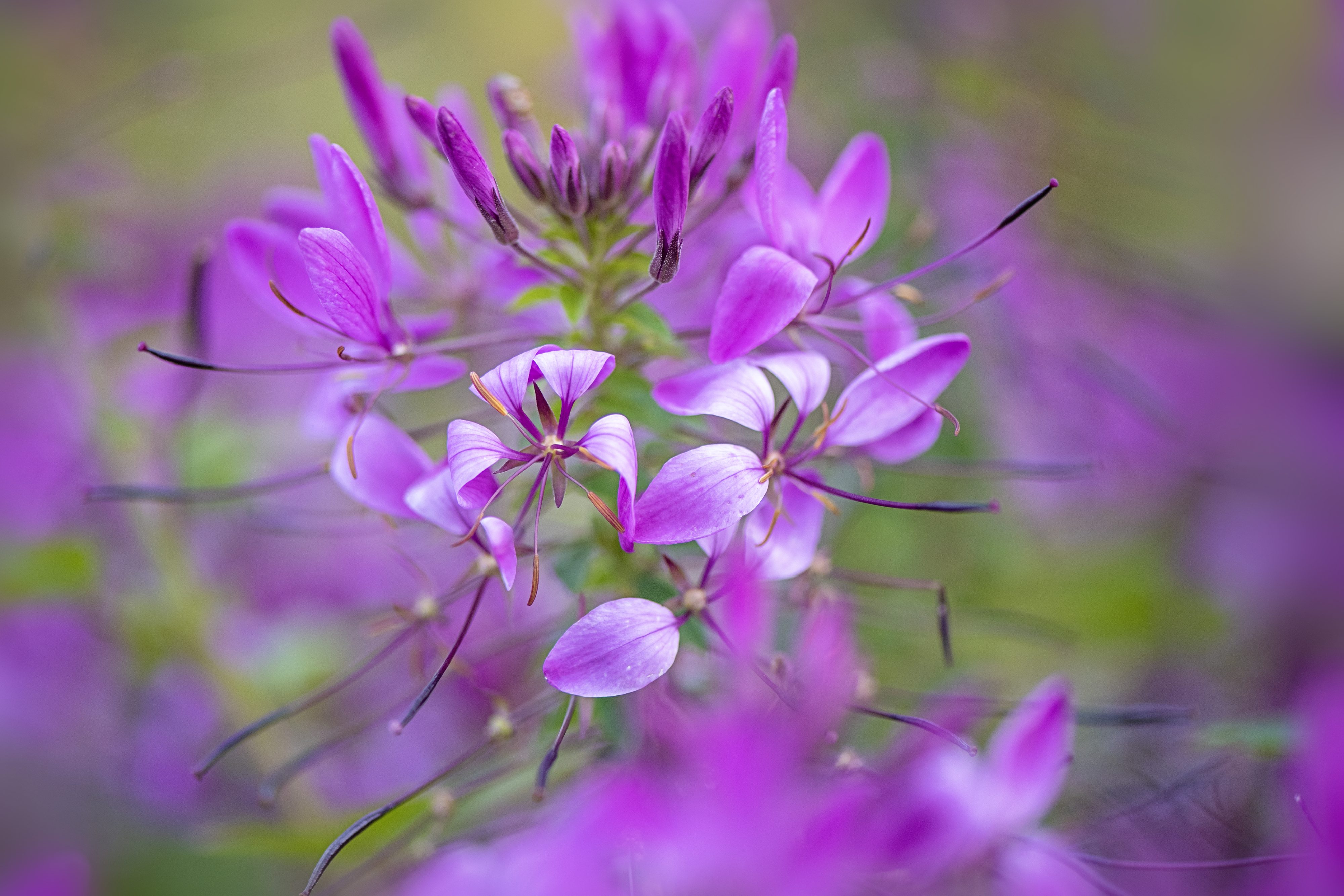
RALEIGH, N.C. (WPTF) – I adore cleome, colloquially known as “spider plant,” “Pink Queen” or “Grandfather’s Whiskers.” Its blossoms are definitely pink in various shades, with a bit of white thrown in.
Cleome has a busy look, with lots of geometric shapes — or maybe spider legs. I had never noticed cleome until about 40 years ago, when I saw large numbers of blooms along a ditch bank on a road near where I live. The flowers were eye-catching!
I soon discovered that my neighbor had a patch of them, and she shared a few seeds, which I planted in the early spring. Much to my delight, they came up! Alas, as my landscape became filled with trees and shrubs, my cleome bit the dust.
Cleomes are not native to North Carolina. They do, however, thrive here. They are native to South American countries such as Argentina, Brazil and Uruguay. They can be counted on as annuals in some regions of the Tar Heel State. Heirloom varieties will drop seeds and therefore come back and spread for years. Cleome is not considered invasive in North Carolina, and it does not crowd out native species.
Store-bought cleome seeds, such as those in the “Queen” series, may benefit from some cold stratification. Mix the seeds with sand or peat moss and place them in the refrigerator for four to six weeks. Plant the seeds by pressing them into the soil. Do not bury cleome seeds; they need light to germinate.
Plant them in the spring after the average last frost. In the Raleigh area, that’s April 15. The soil needs to be warmed up. Place the seeds a few inches apart.
Cleome flowers feed pollinators such as birds, bees, hummingbirds, butterflies, bats and moths, and the blooms last for a long period of time. These blooms are followed by green seedpods that turn brown, split open and then disperse the seeds.
Cleomes are low-maintenance and pretty much pest- and disease-free. Just like the weather, though, there is no guarantee. Other good characteristics are that they don’t need fertilizer, deadheading or staking.
There are sterile, or non-self-seeding, varieties of cleome. The “Senorita” series is thornless and has odor-free foliage, while the “Linde Armstrong” variety is more compact. The “Helen Campbell” cultivar is a small variety with a pure white flower.
There is also a new dwarf hybrid cultivar series known as “Cleome hybrida.” “Sparkler” is another dwarf variety. “Cherry Queen,” “Rose Queen,” “Violet Queen” and “White Queen” are also stupendous varieties. These cultivars may be more reliable in some ways; however, I still prefer the old-fashioned varieties.
If you are game, find a spot with full sun, or maybe partial or dappled shade, according to my friends at NC State. Cleomes prefer well-drained soil in your landscape. They are heat- and humidity-tolerant.
Deer and rabbits normally won’t mess with this flower, mostly because of the pungent fragrance of the foliage. The flowers have more of a neutral fragrance. You might see aphids, spider mites or whiteflies on your cleomes, but they won’t dare kill the plant.
I’m betting most of your grandmothers planted cleome in their gardens. That’s a good enough reason to do the same yourself.
Right?